Vallbona Nature Art Center
This third-year architecture project aimed to revitalize the suburban town of Vallbona near Barcelona by designing a new building for the local community. By analyzing Barcelona’s geographical features and leveraging Vallbona’s unique strengths, I proposed a "Nature Sensor"—a structure that amplifies natural elements to help artists and residents from the city center reconnect with the power of nature.
Key words: Ecological architecture, Cultural building, Nature sensor
Time
2022
Type
Architecture
Team
Individual
/ Research
The Layers of Barcelona
From a bird’s-eye view, Barcelona reveals its layered urban fabric: the medieval old town, the 19th-century L'Eixample, and the modern, green Brownstone districts. Like archaeological strata, these urban textures record the city’s history and tell the story of its unique identity.
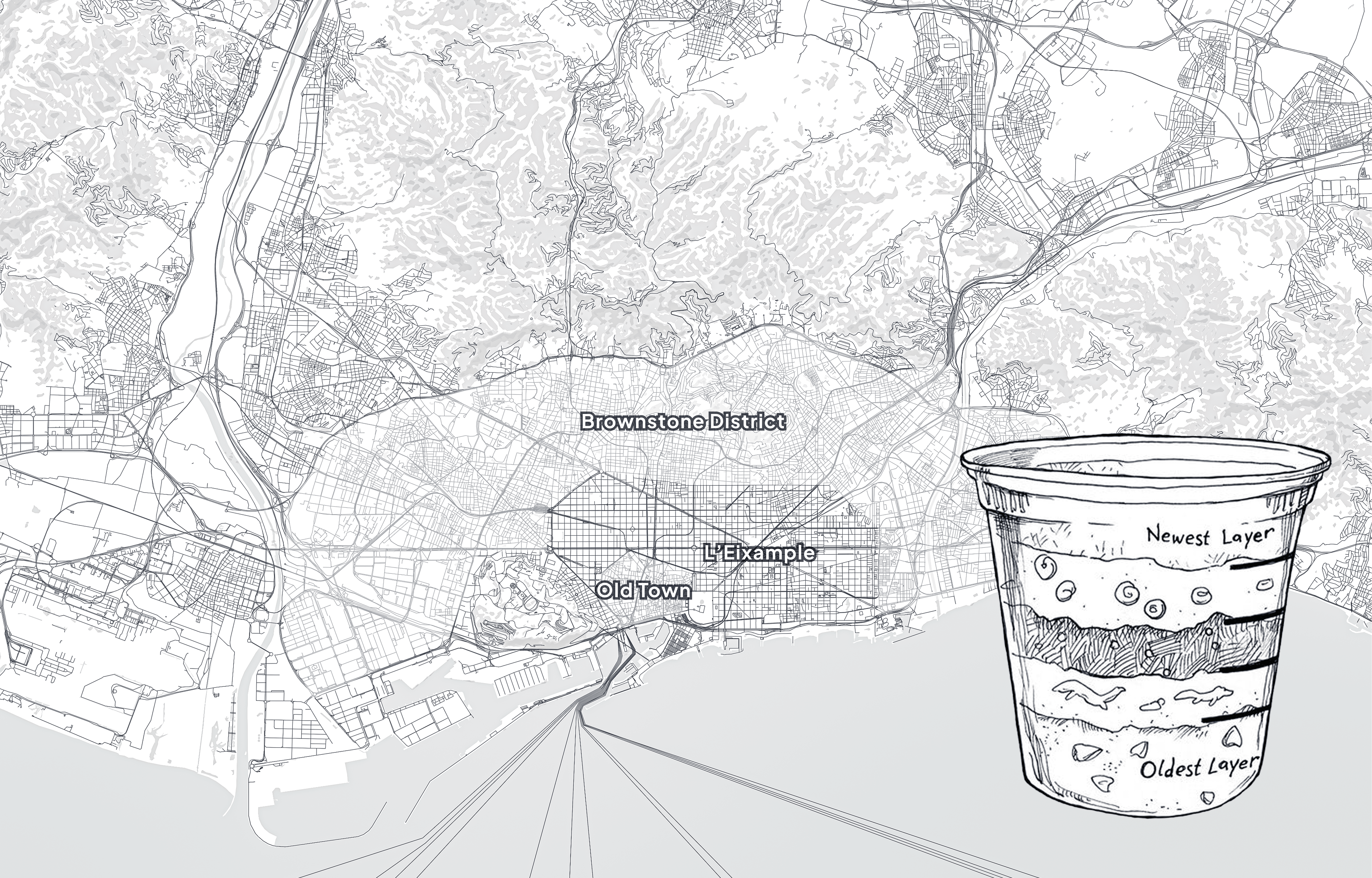
Map of Barcelona 1:1000
Vallbona: The Cross of Culture and Nature
Vallbona sits at a uniquely strategic point—along a key route linking Barcelona’s urban center with its suburbs, serving as a corridor for cultural and human activity. At the same time, mountain ranges extend through the area, forming a natural corridor. As the intersection of these two pathways, Vallbona embodies a dual character shaped by both culture and nature.
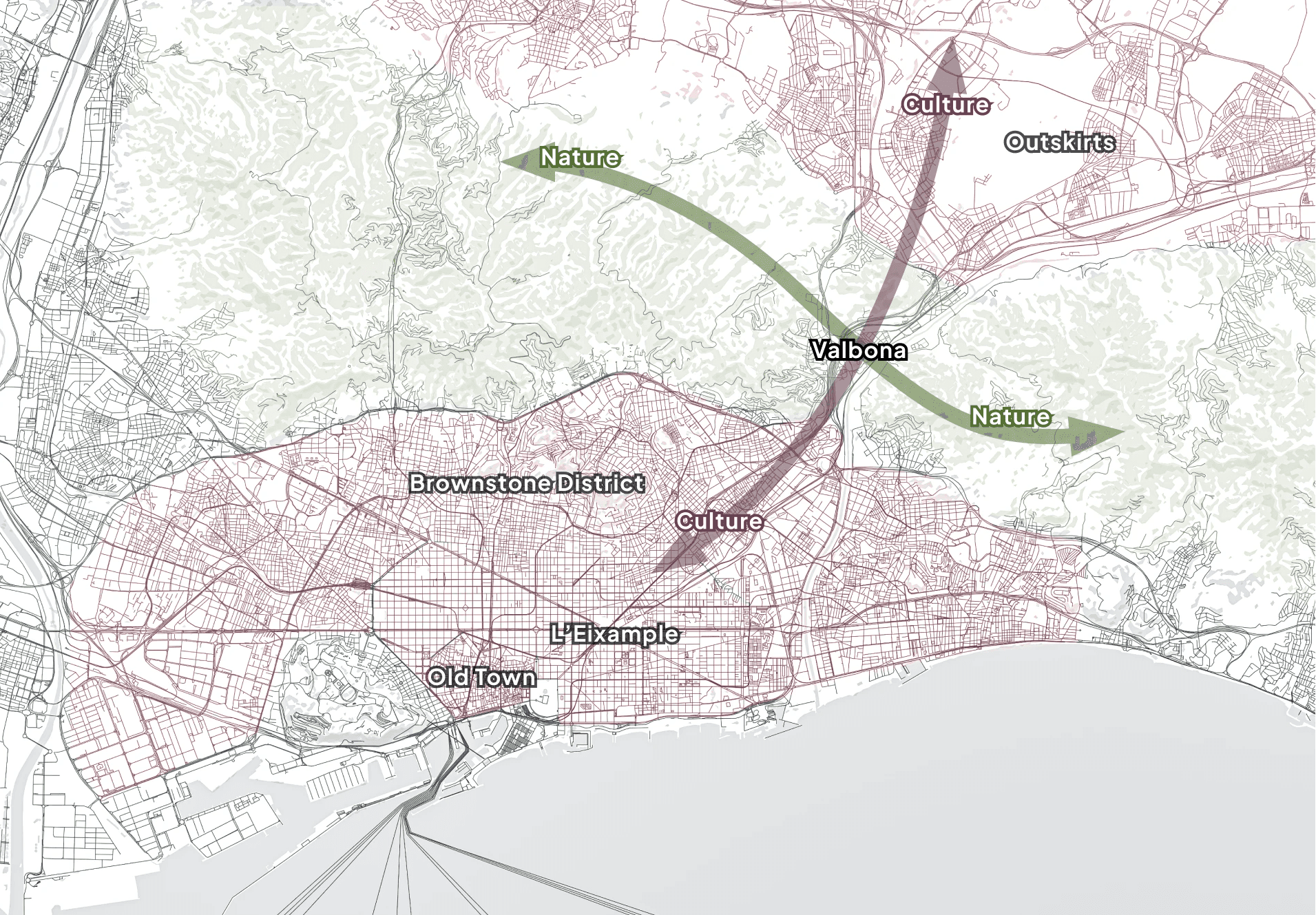
The unique location of Vallbona 1:100,000
Vallbona: Rich Natural Resources
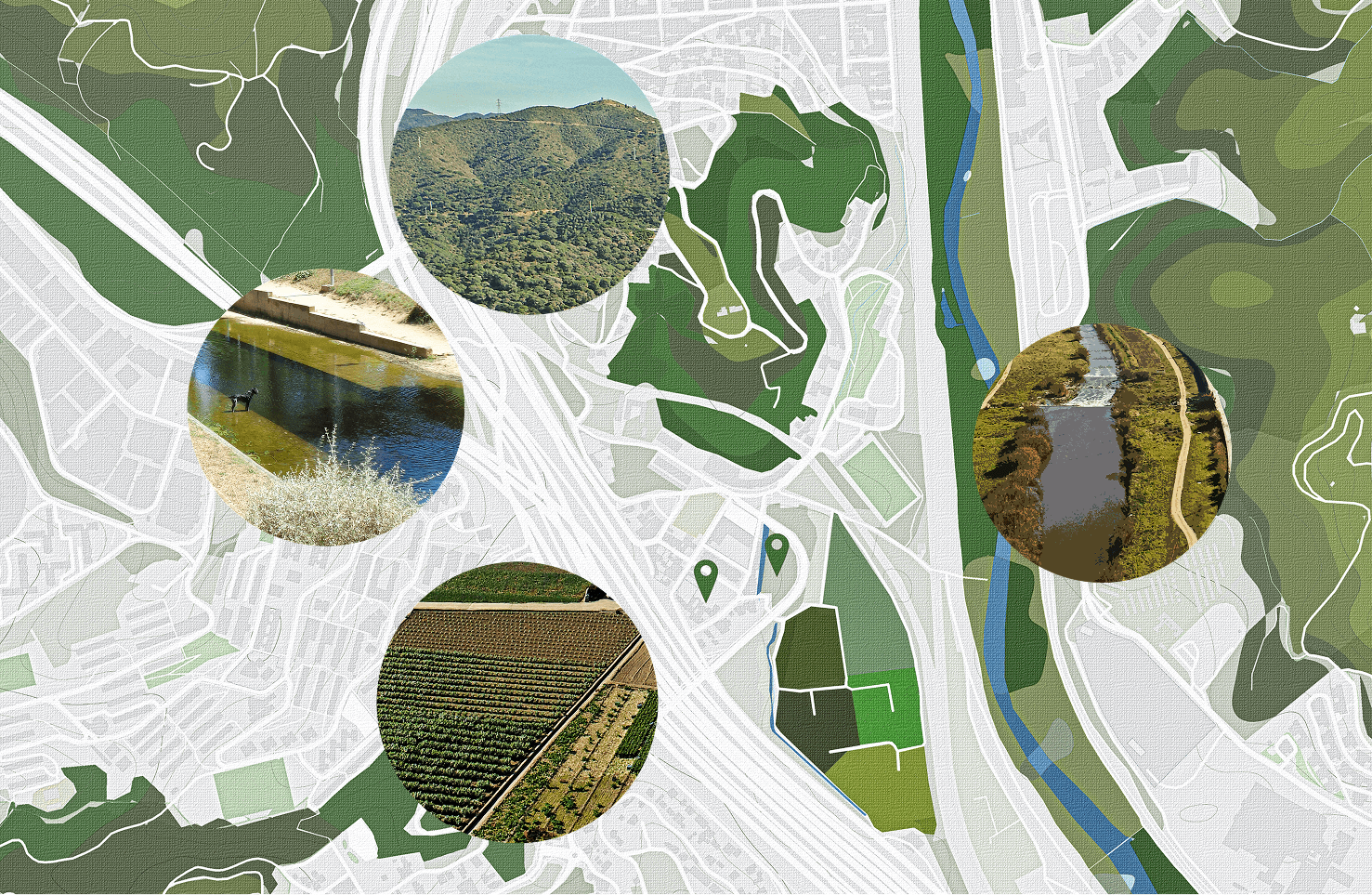
Vallbona is nestled within the Collserola mountain range, blessed with abundant natural resources and a unique landscape of hills, rivers, and farmland. With its convenient transport links, it serves as an ideal retreat for Barcelona residents seeking a close connection with nature.
Art and Nature
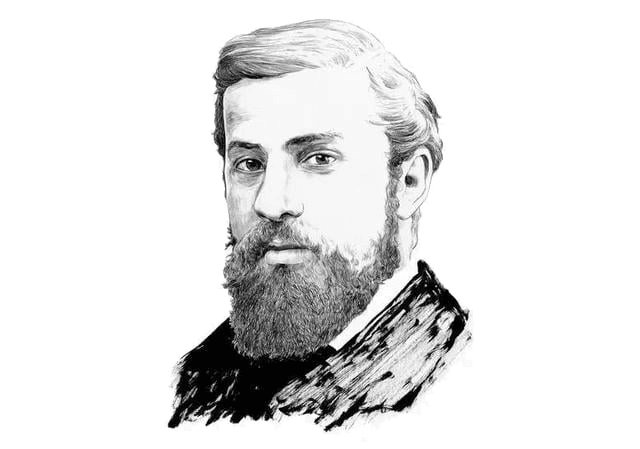
Antoni Gaudí i Cornet (1852-1926)
- Anything created by human beings is already in the great book of nature.
- Nothing is art if it does not come from nature.
- Those who look for the laws of Nature as a support for their new works collaborate with the creator.
— Antoni Gaudí
/ Concept Development
Function of this Building
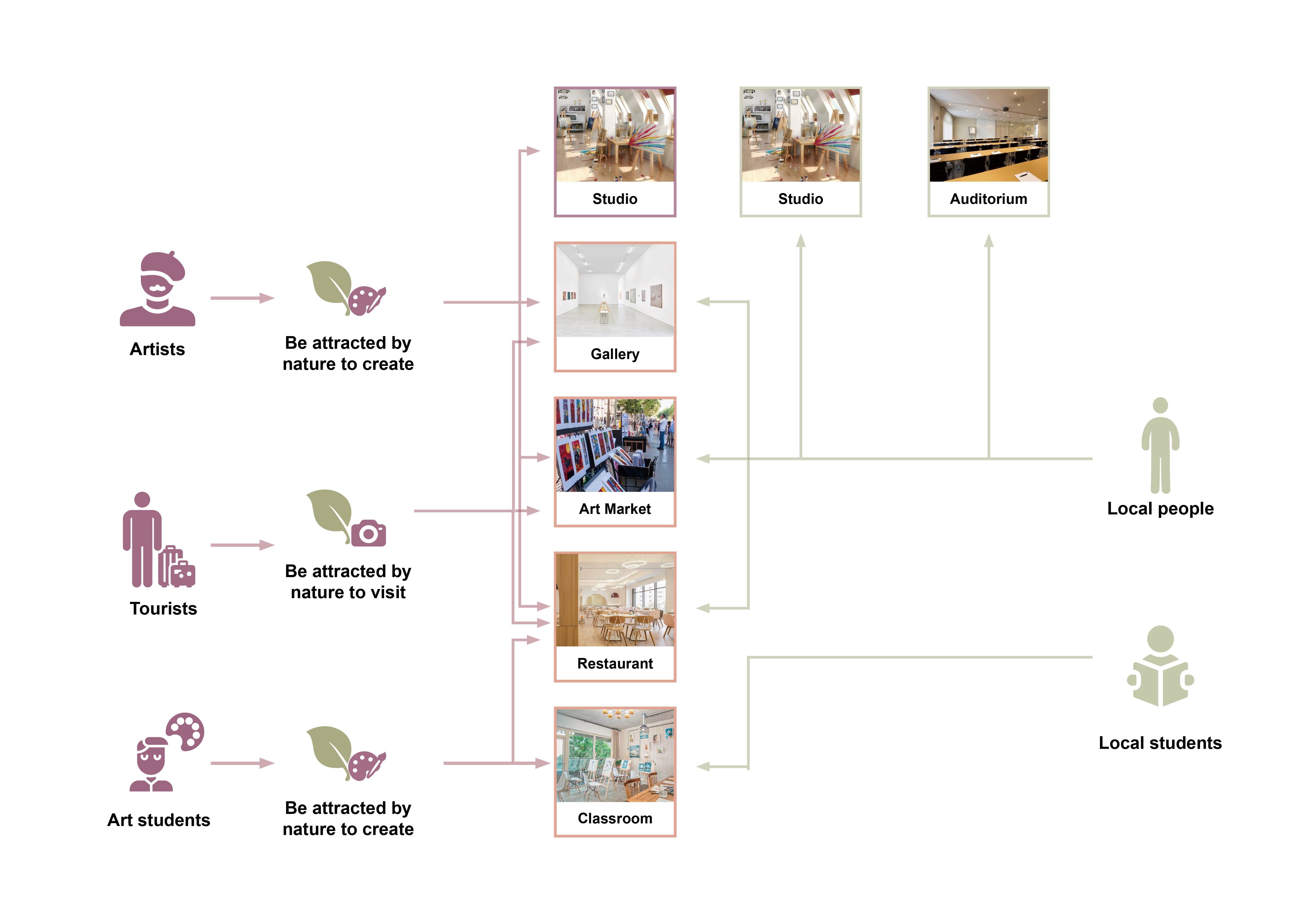
There are five main user groups for the Nature Art Center: artists, tourists, art students, local residents, and local school students. The first three are drawn by the natural environment, coming here to create and explore, while the latter two are attracted by the cultural atmosphere and make use of the center’s cultural facilities. The following chart outlines how each group engages with different functions of the center.
/ Final Presentation
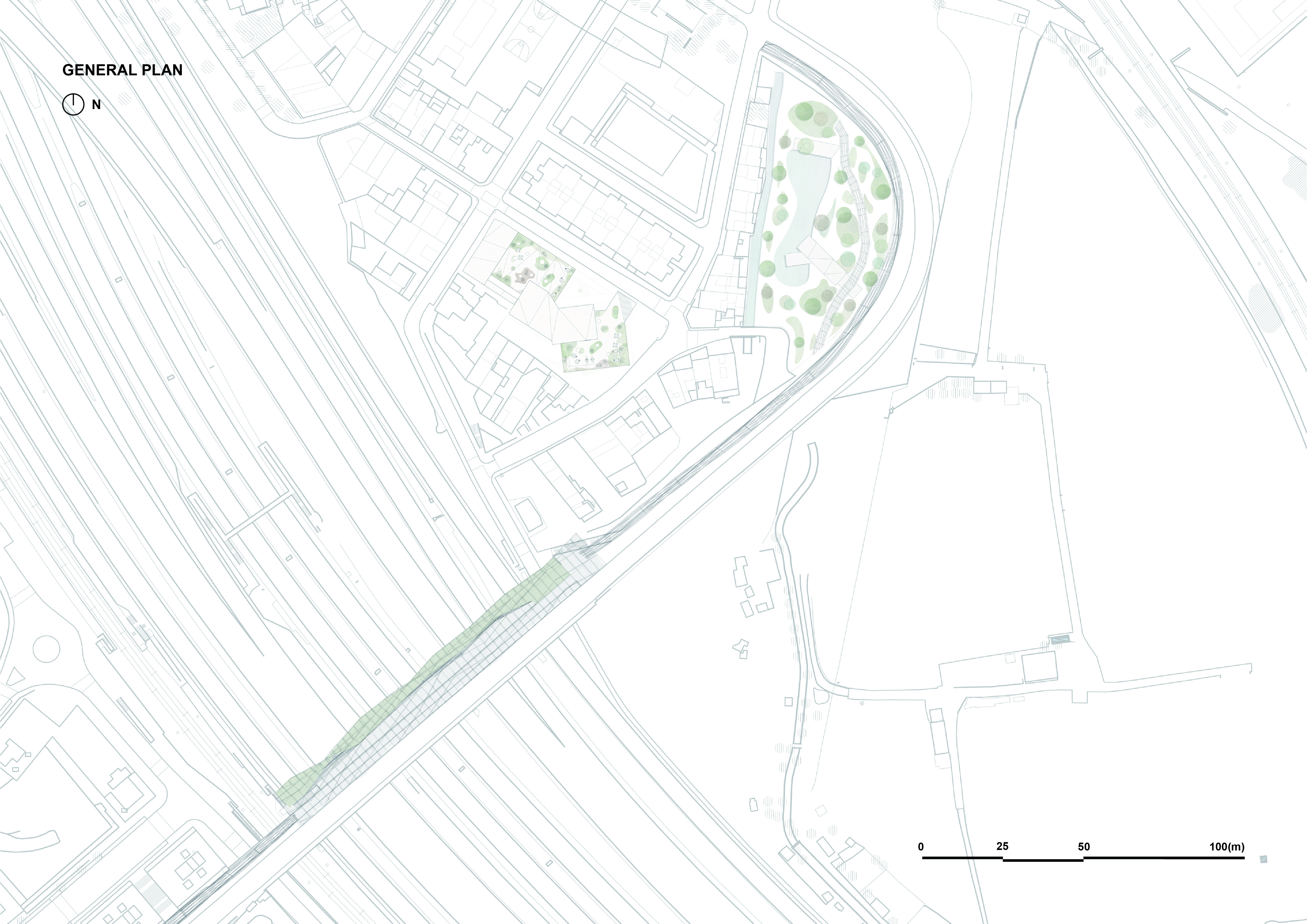
General Site Plan
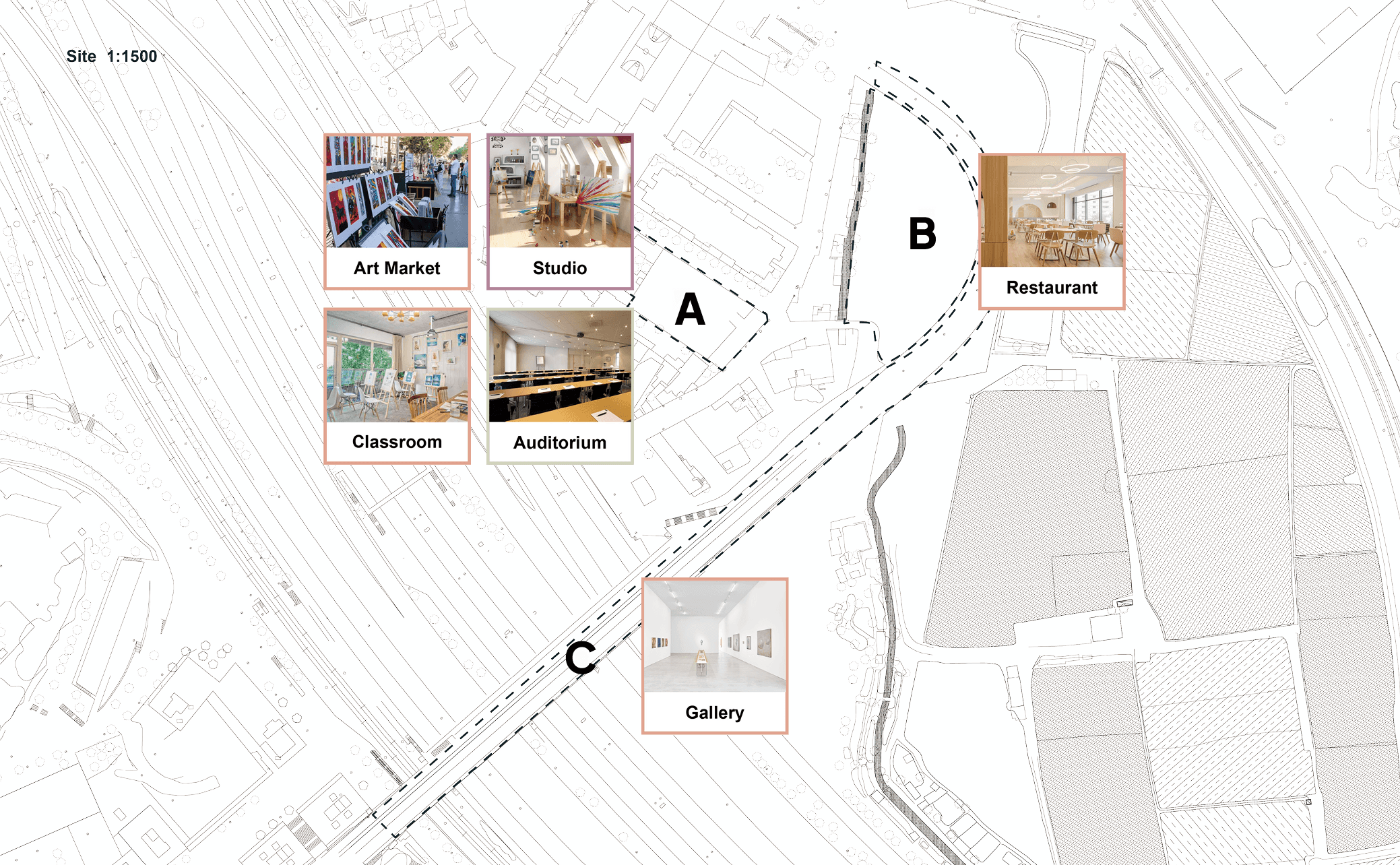
The site is divided into three main areas:
Site A is the core building of the Nature Art Center, dedicated to art education and creative work.
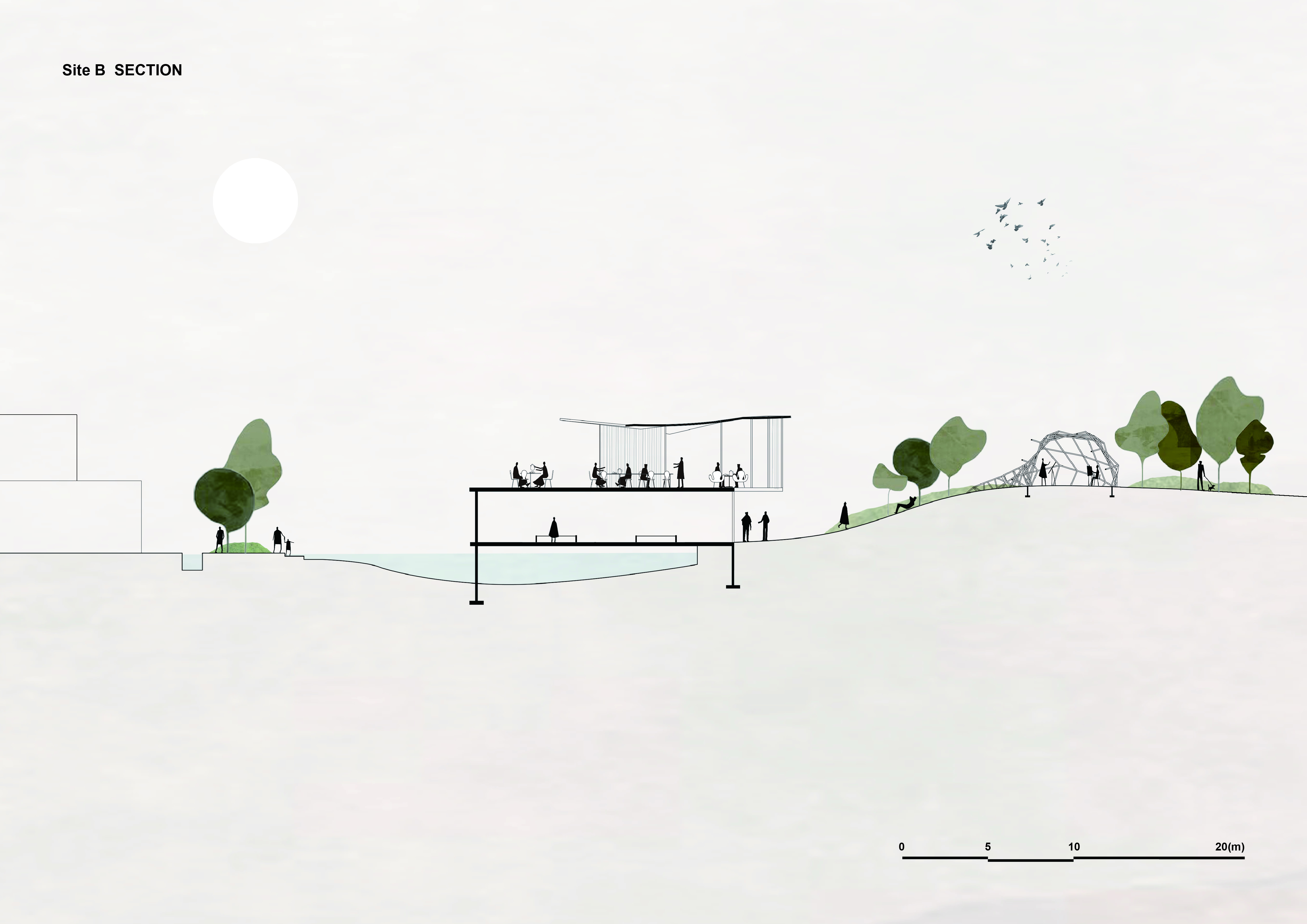
Site B is a sloped green space designed for relaxation, offering a restaurant and café.
Site C is a bridge and the main gateway to Vallbona; placing a gallery here aims to establish an artistic atmosphere right at the community’s entrance.
Site C: Bridge Gallery
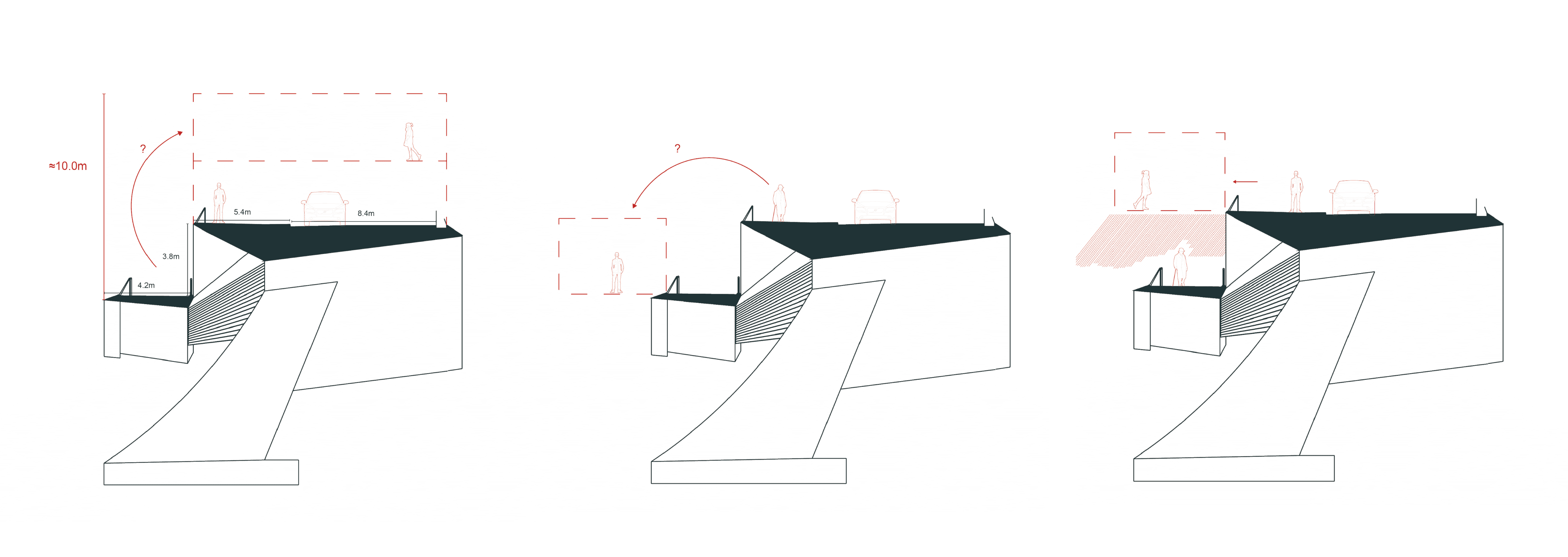
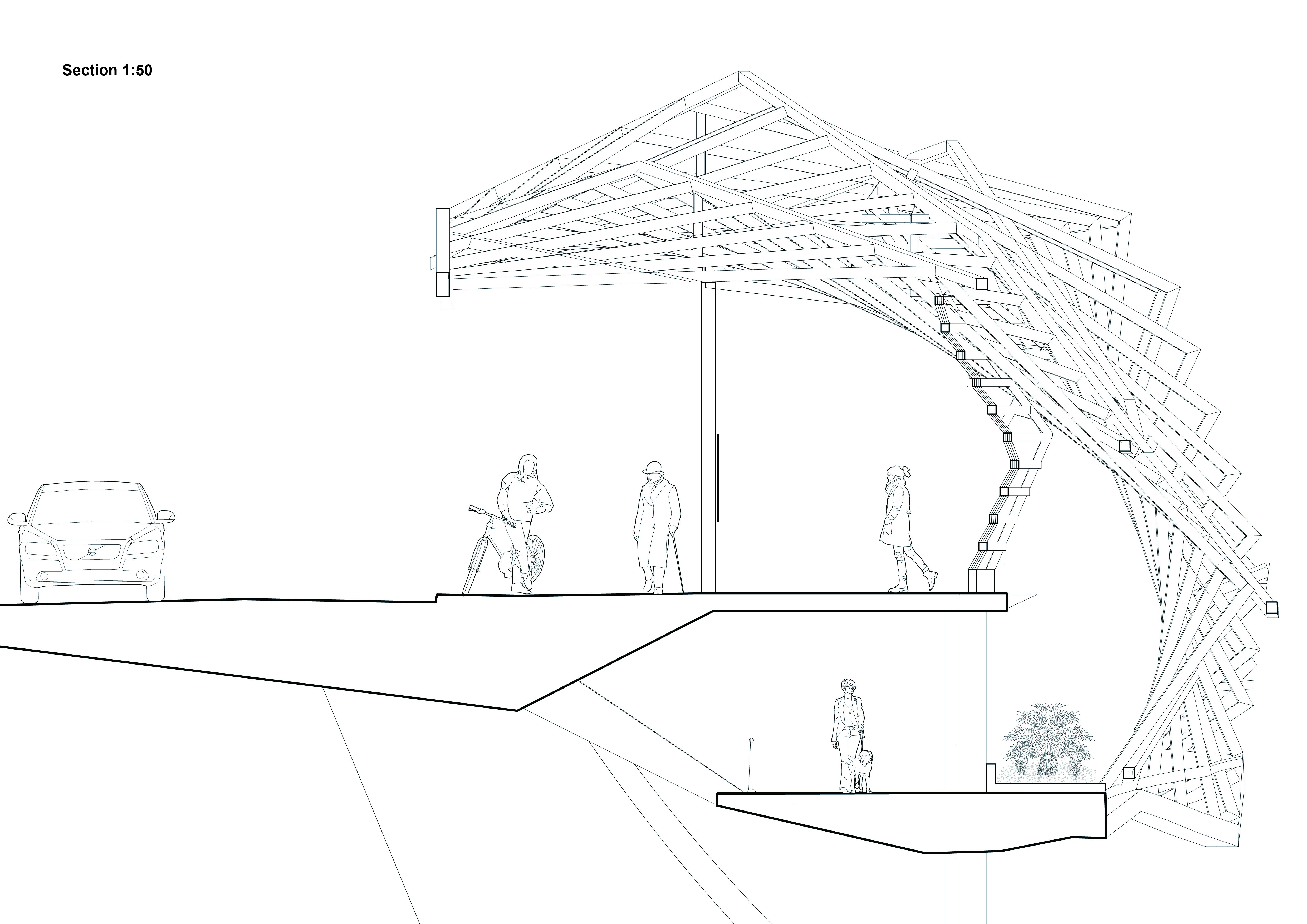
The bridge to Vallbona has two levels: the upper for cars and pedestrians, the lower for pedestrians only. Placing the gallery above the upper level would make it too tall, while the outer side of the lower level lacks support. So I chose the outer edge of the upper level, which offers structural support and provides shade and shelter for people below.
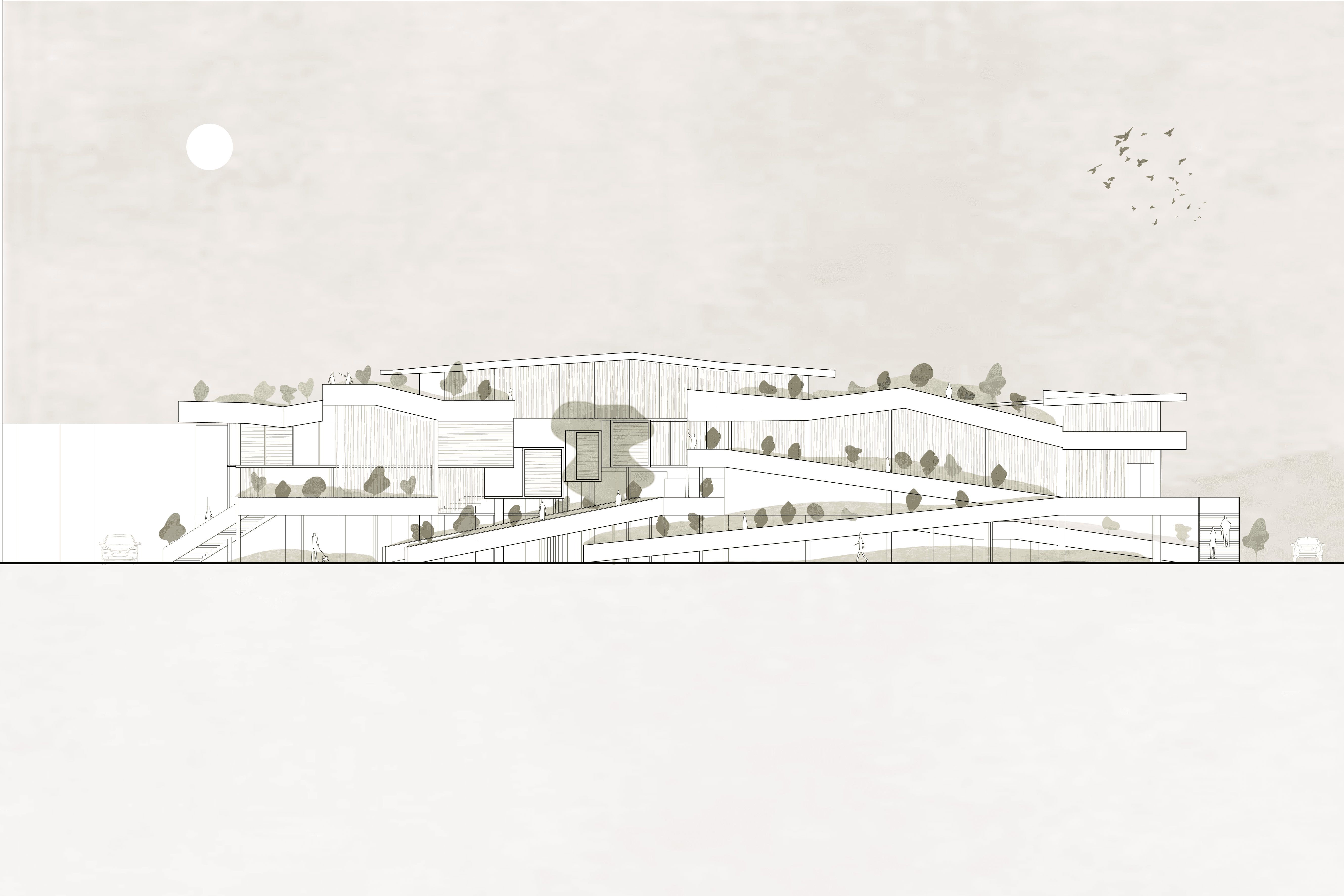
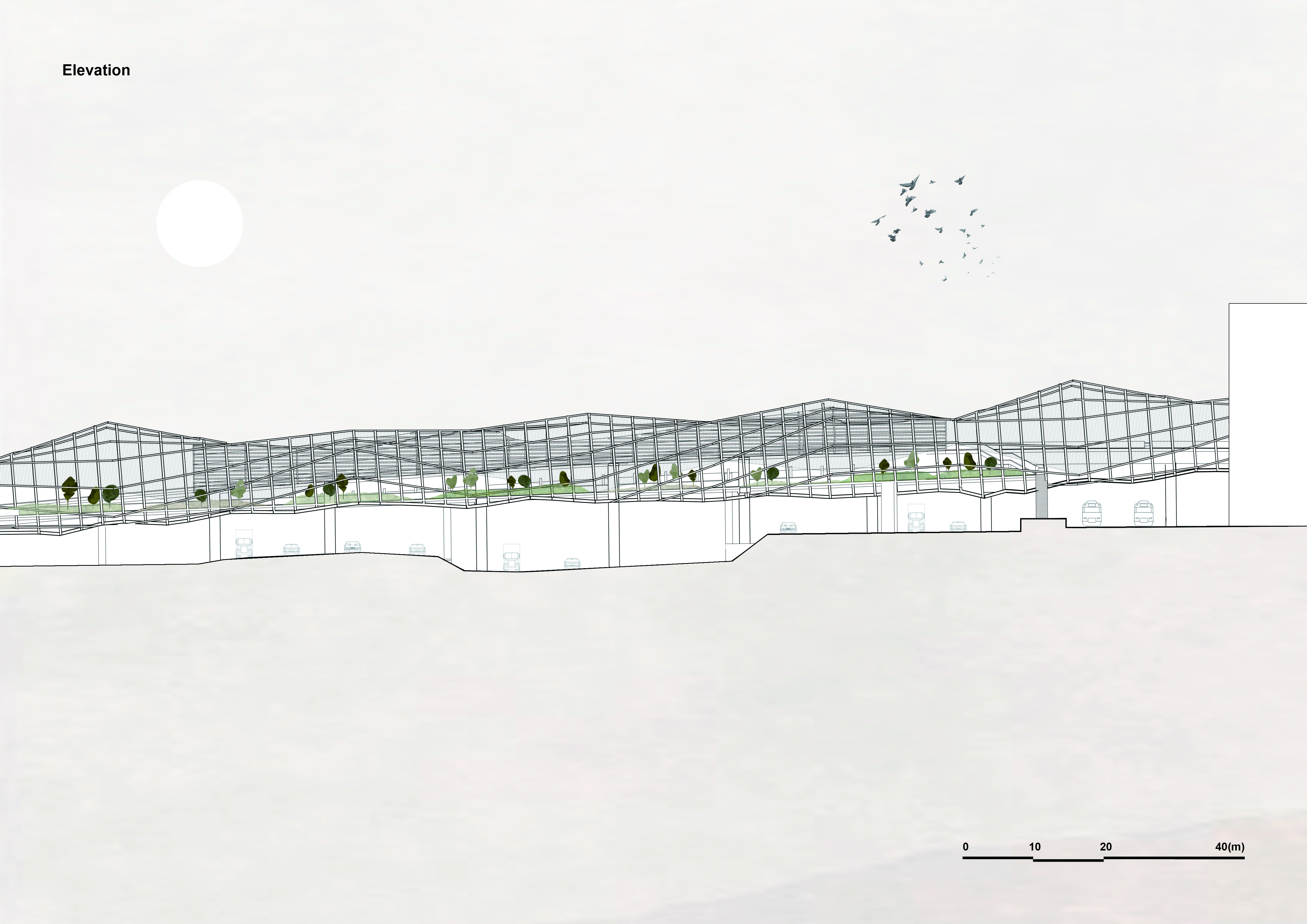
The gallery adopts an undulating frame structure inspired by the surrounding mountains, echoing the natural landscape.
Site B: Garden
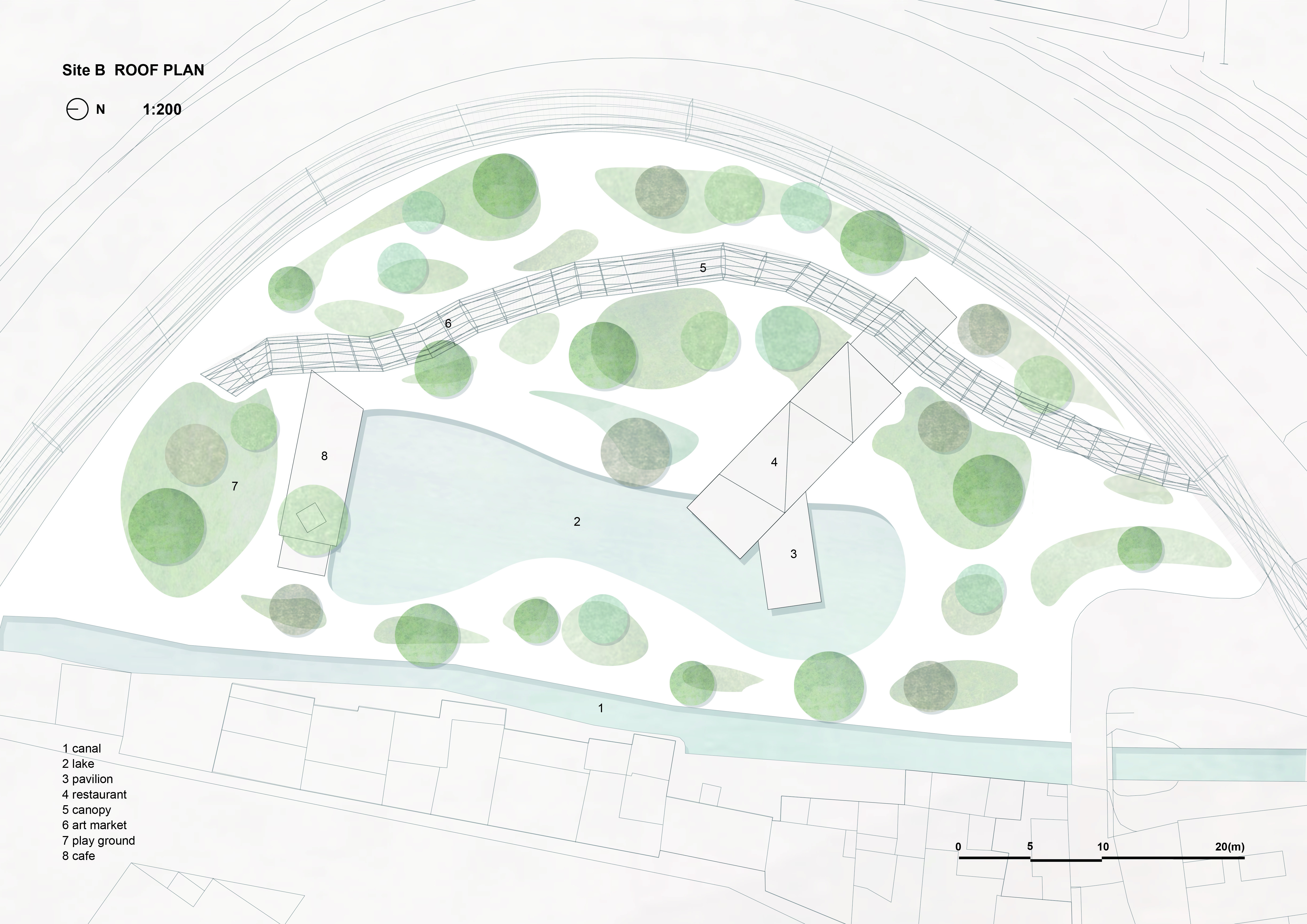
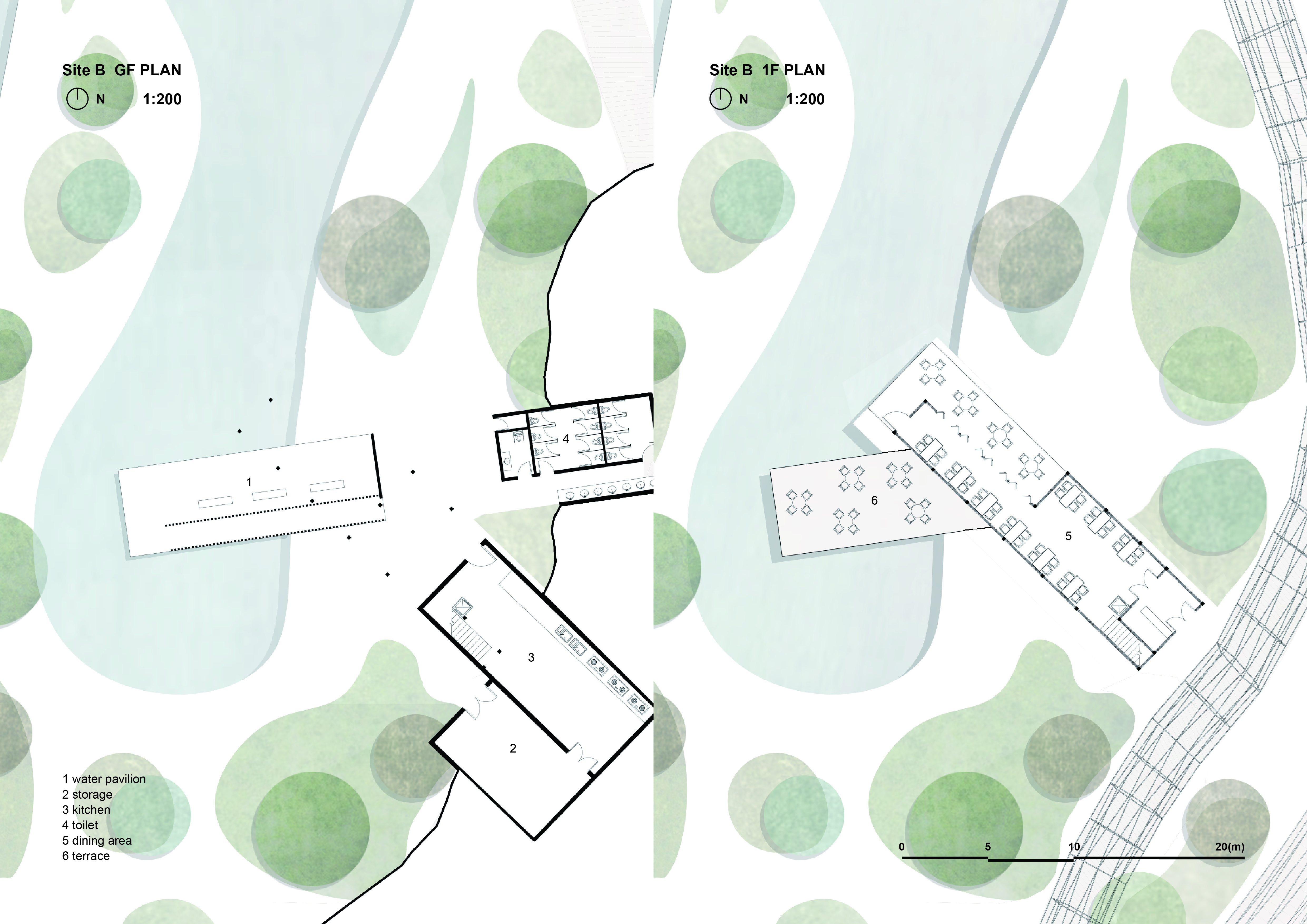
Site B is a sloped green space where the corridor from Site C extends and connects to the restaurant and café. The canal brings in water, creating a scenic lakeside landscape.
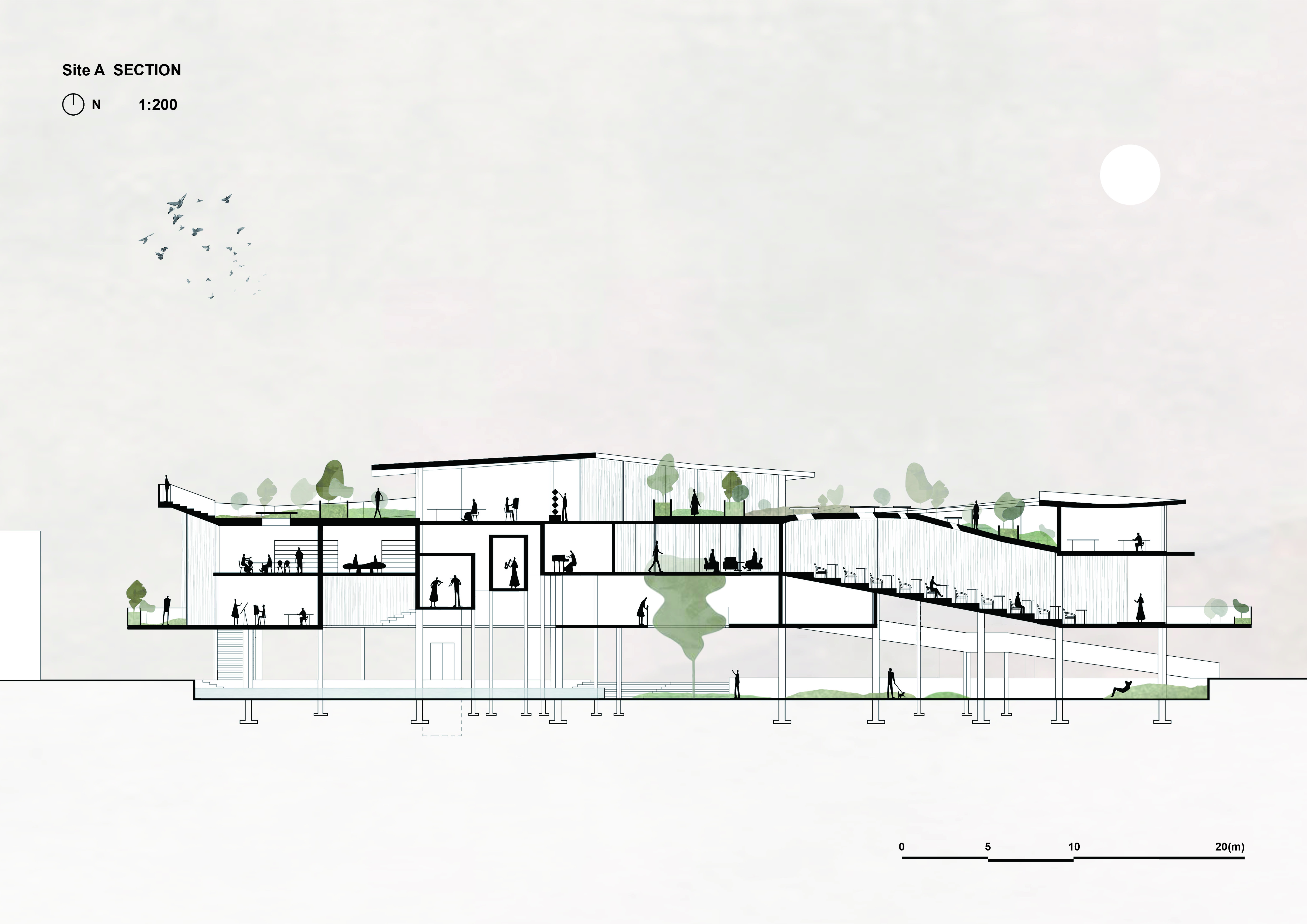
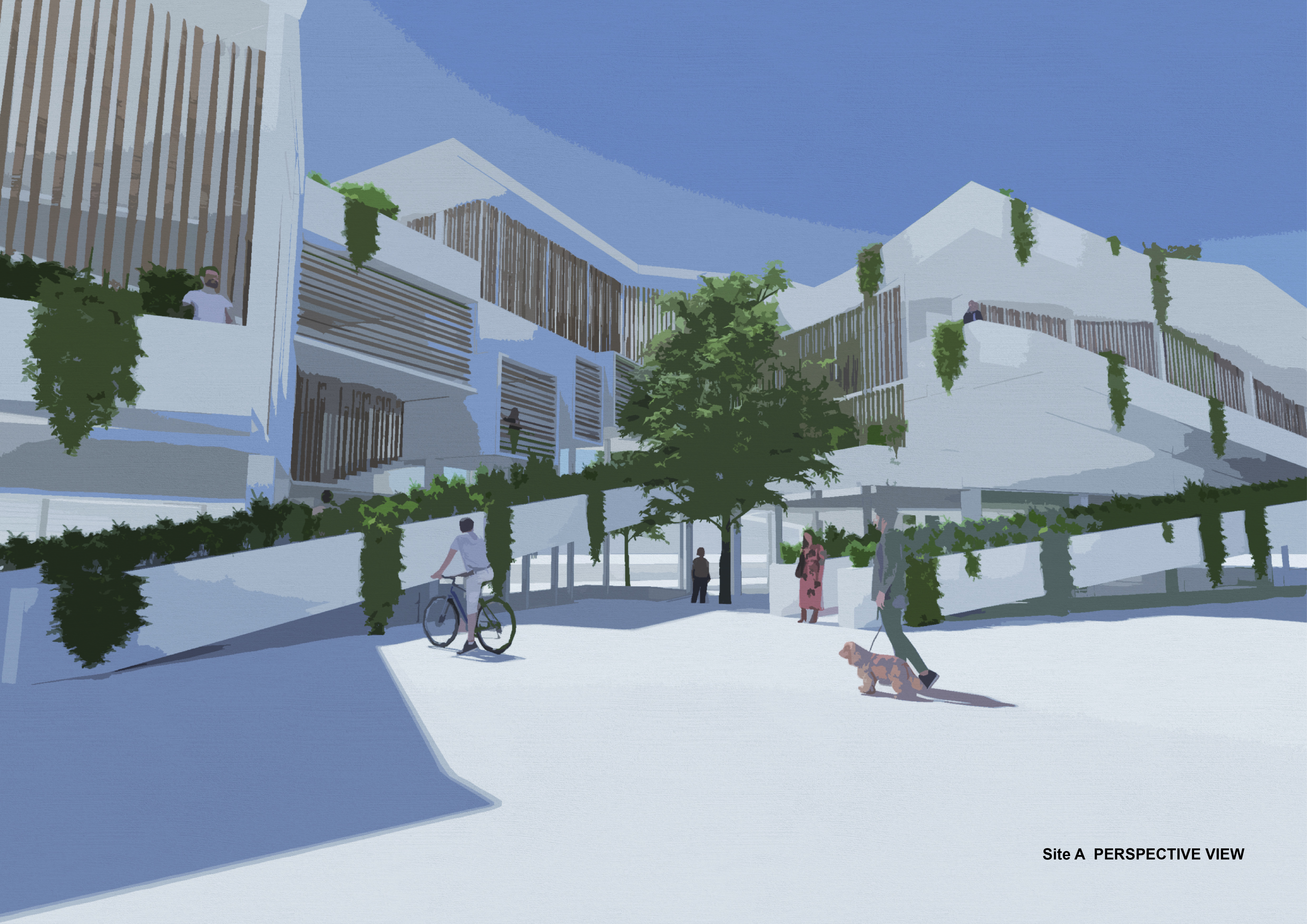
Site A: Natural Art Center
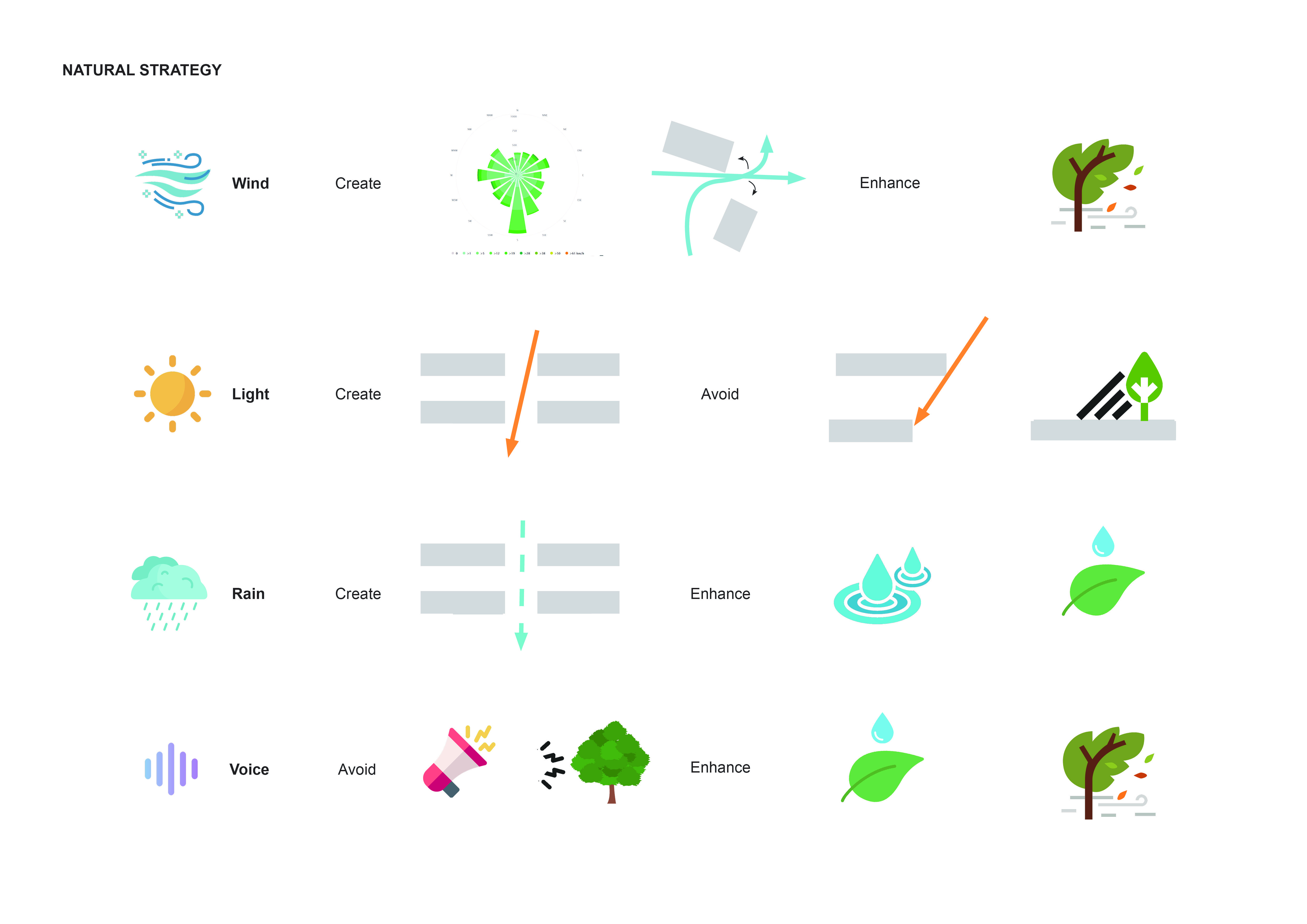
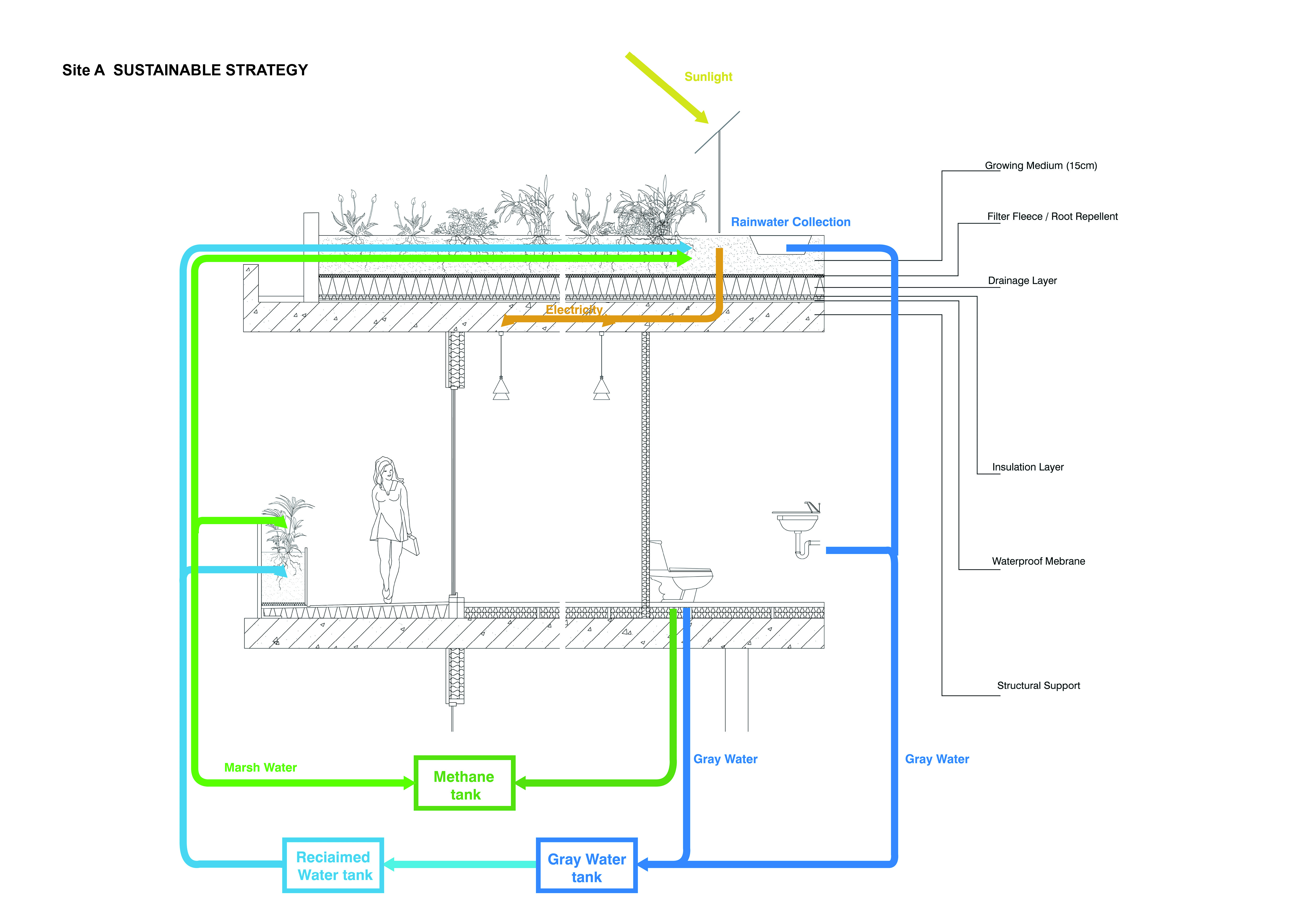
The Nature Art Center is designed to enhance the natural environment and immerse people in nature. It incorporates four natural elements: wind, sunlight, rain, and sound.
Wind: The building is split and rotated to allow wind to flow through, with a raised base to increase airflow. Trees in the courtyard let visitors feel the breeze.
Sunlight: Openings in the building let sunlight in while avoiding excessive shading, and trees provide shade, letting visitors experience changing sunlight.
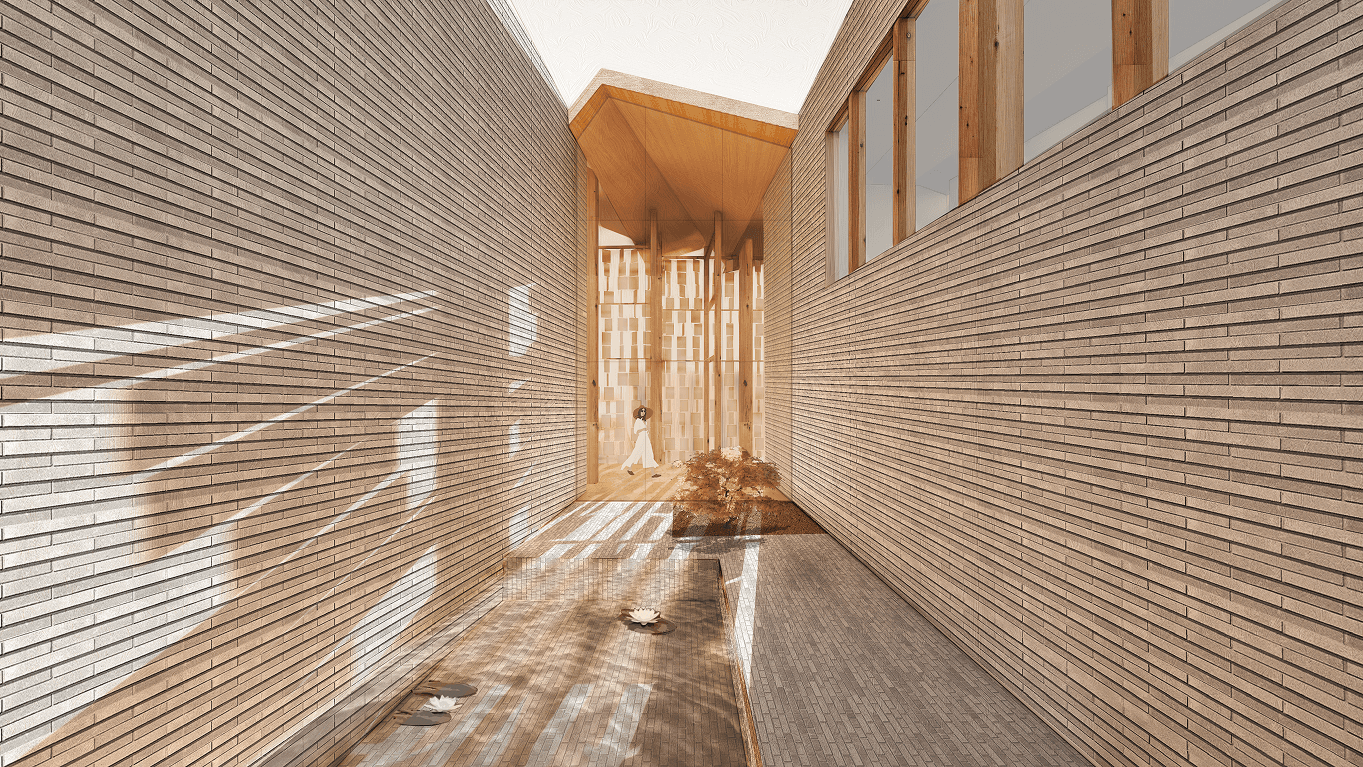
Rain: Openings allow rain to pass through, with ponds on the ground floor that ripple in the rain, letting people feel the rain. Trees also amplify the sound of rainfall.
Sound: The walls block road noise, while trees enhance natural sounds, creating a peaceful environment.
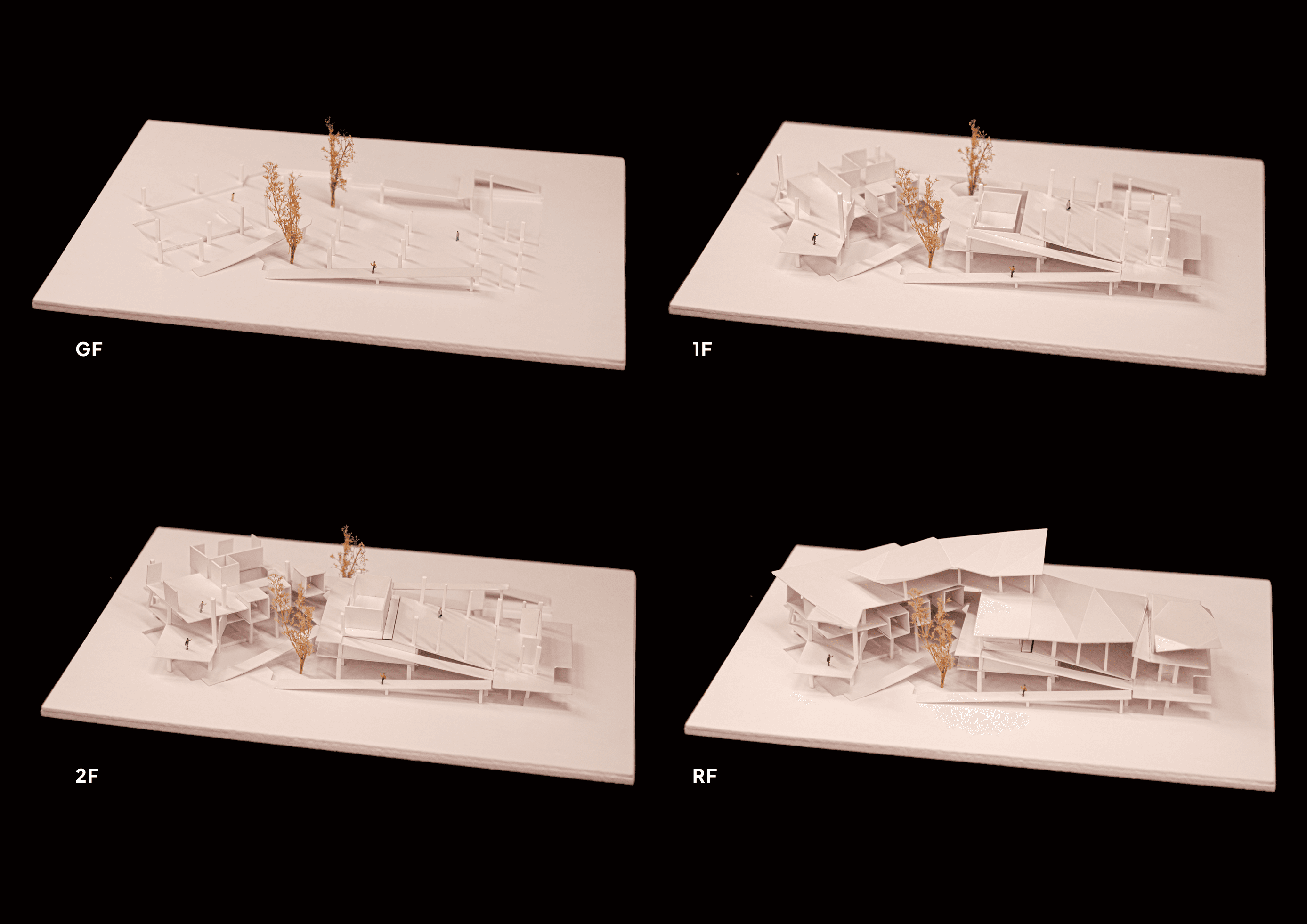
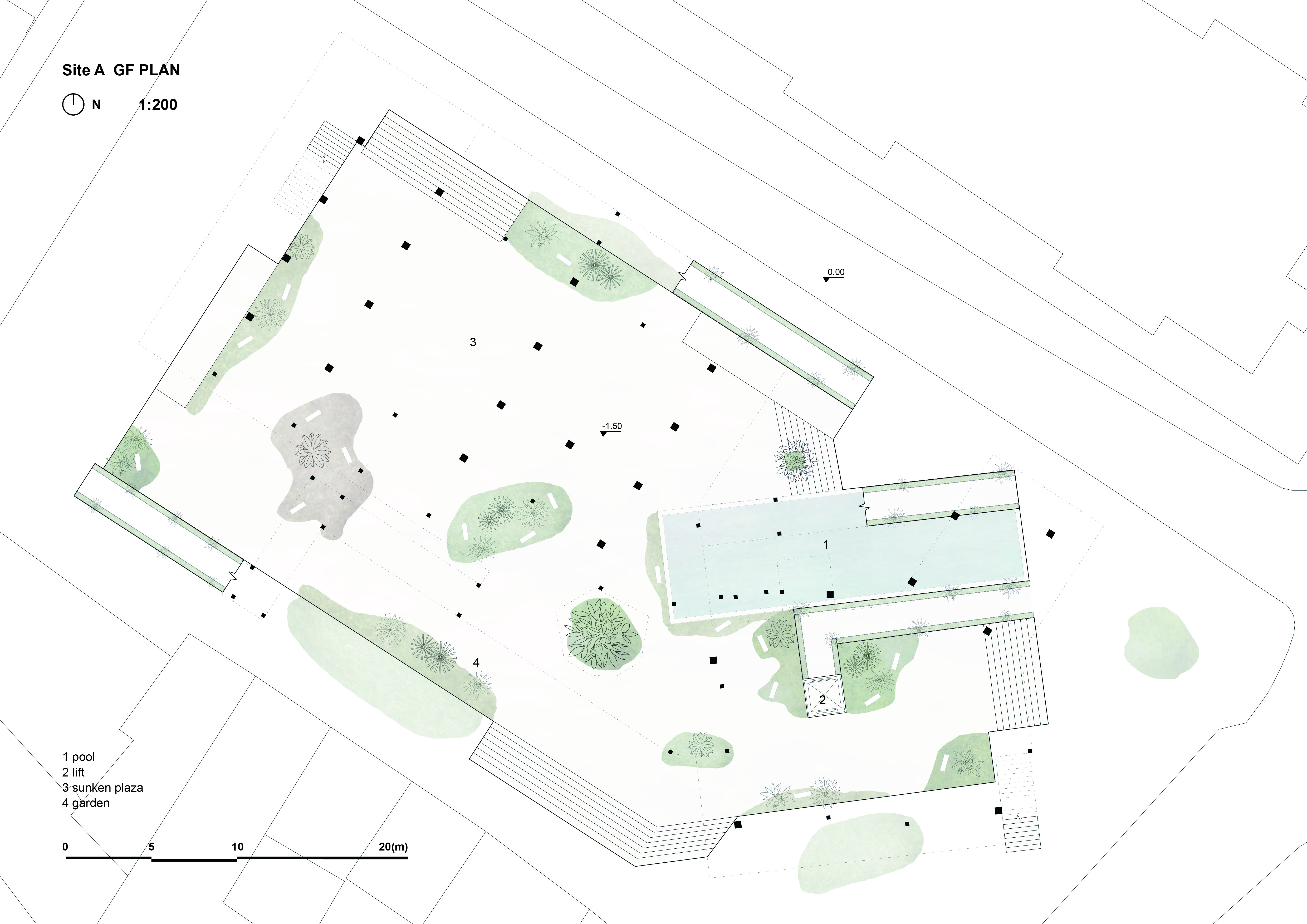
The ground floor is an open garden for gatherings of locals and visitors, hosting regular markets. The building is elevated on columns, with a pool at the entrance. Ramps and stairs lead up to the upper levels.
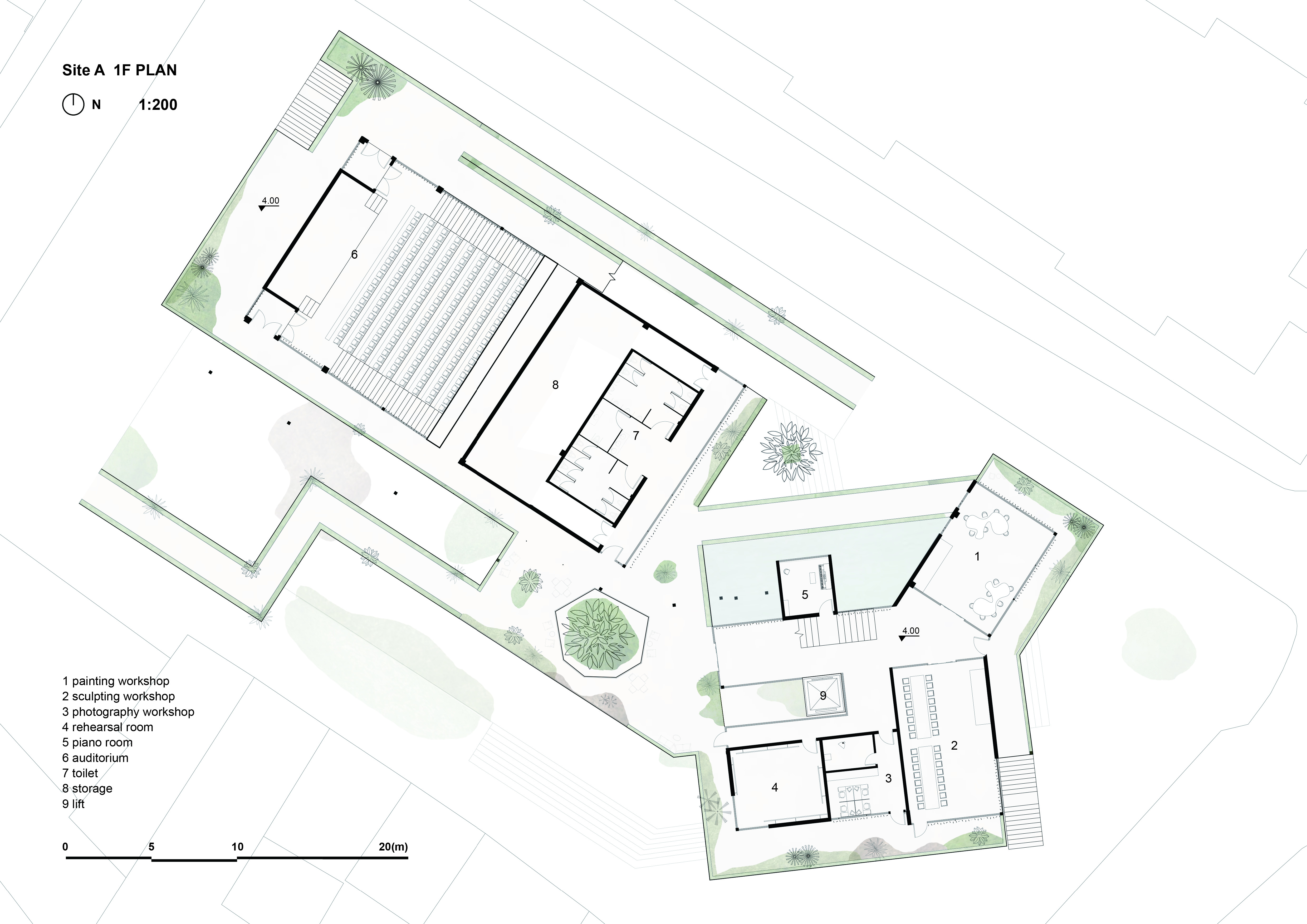
The first floor mainly features an auditorium for community meetings and performances, along with art spaces such as a painting studio, sculpture studio, photography room, and dance studio, which are used by residents, artists, and visitors.
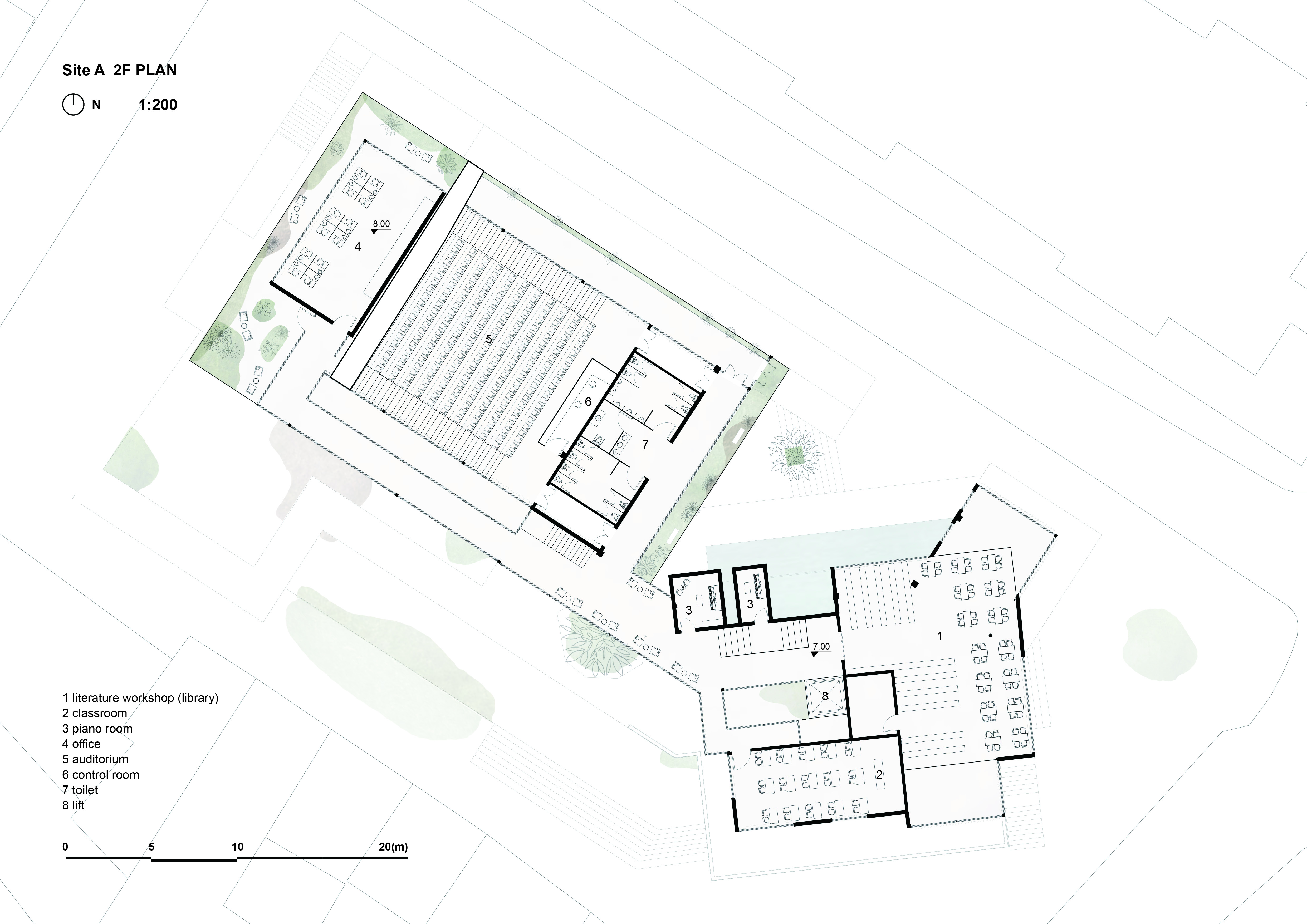
The second floor includes a library, general classrooms, a piano room, and a management office.
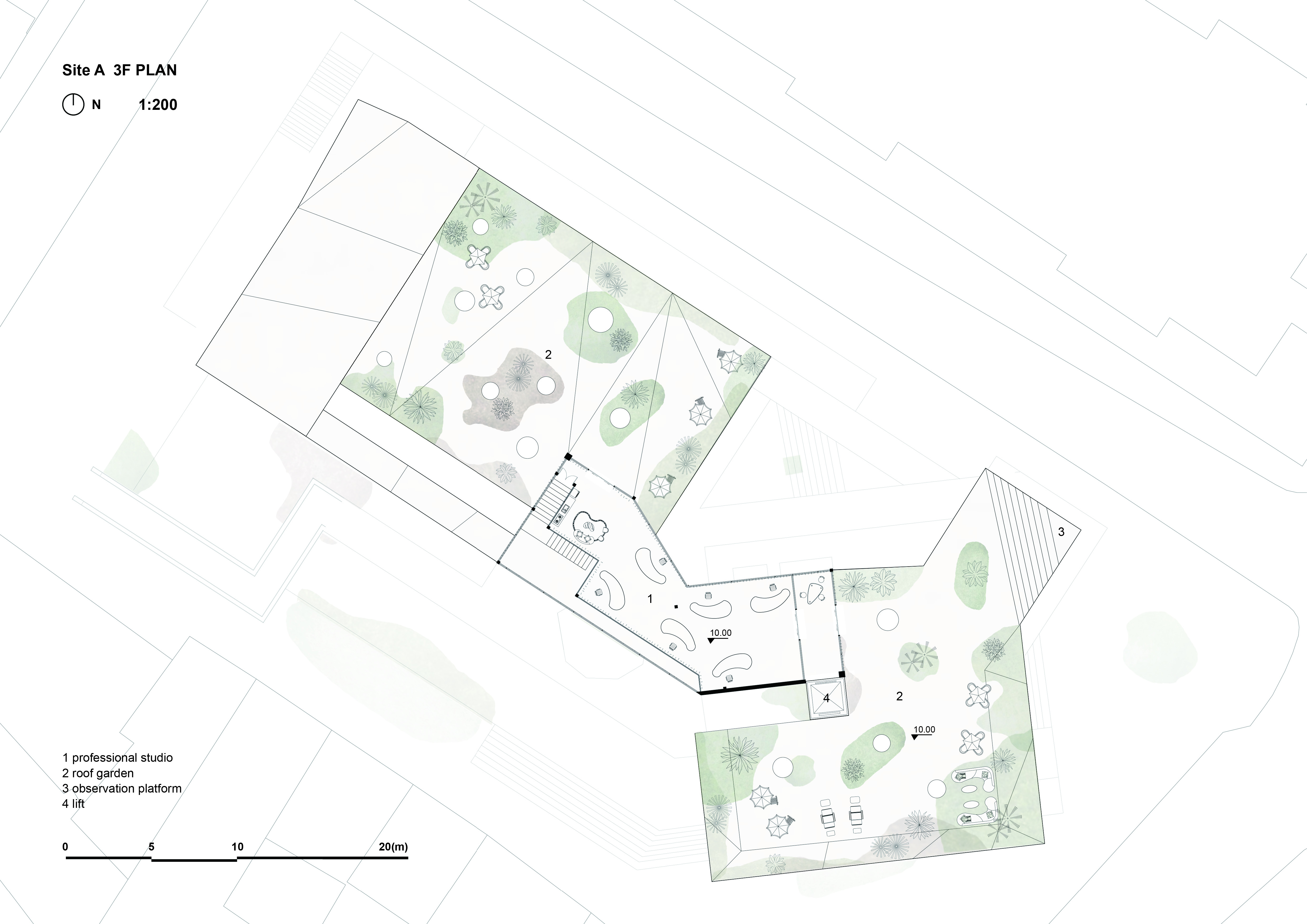
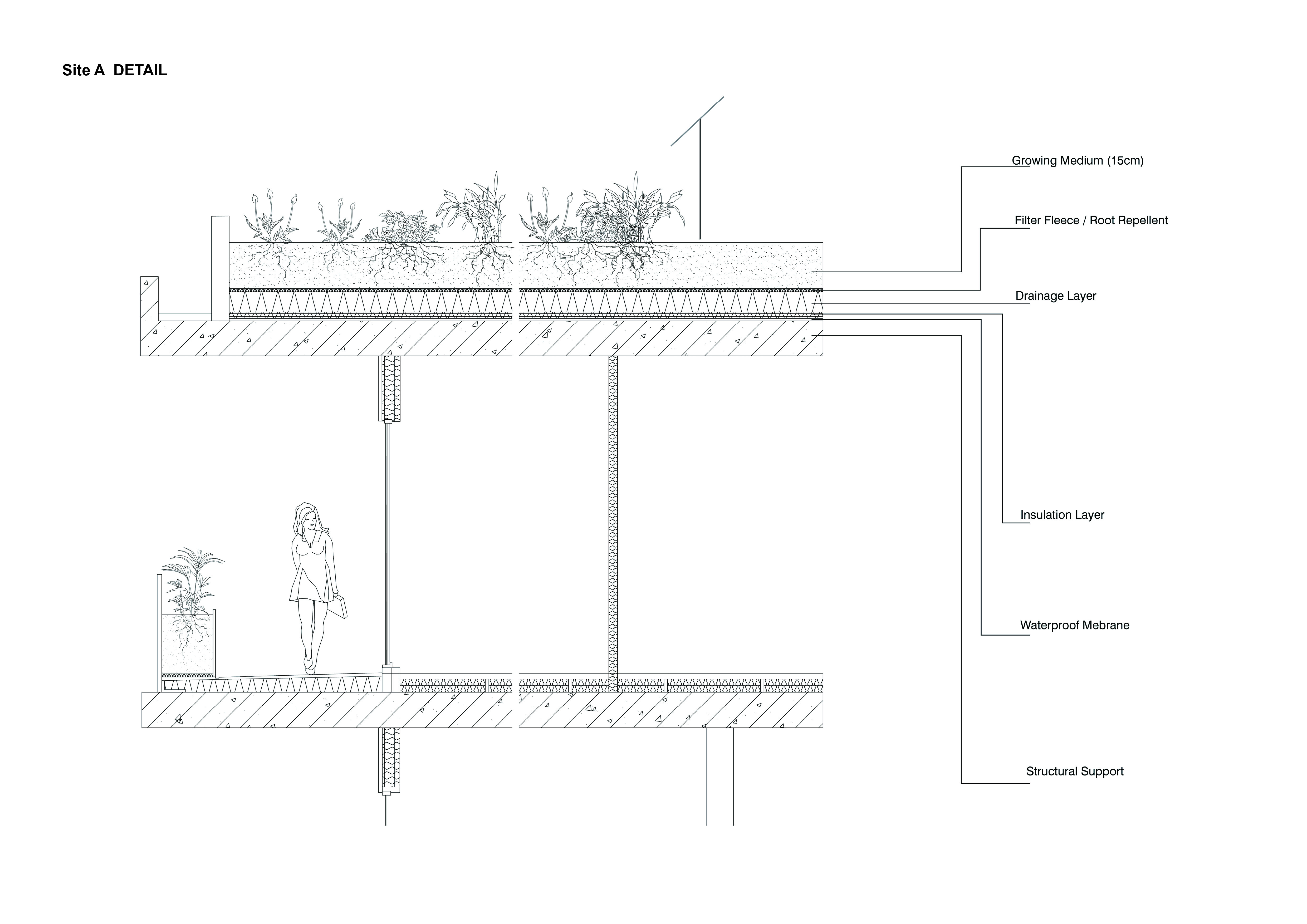
The third floor is mainly dedicated to artists' studios, with a rooftop garden and relaxation spaces. There is also an observation deck offering panoramic views of the fields and mountains.
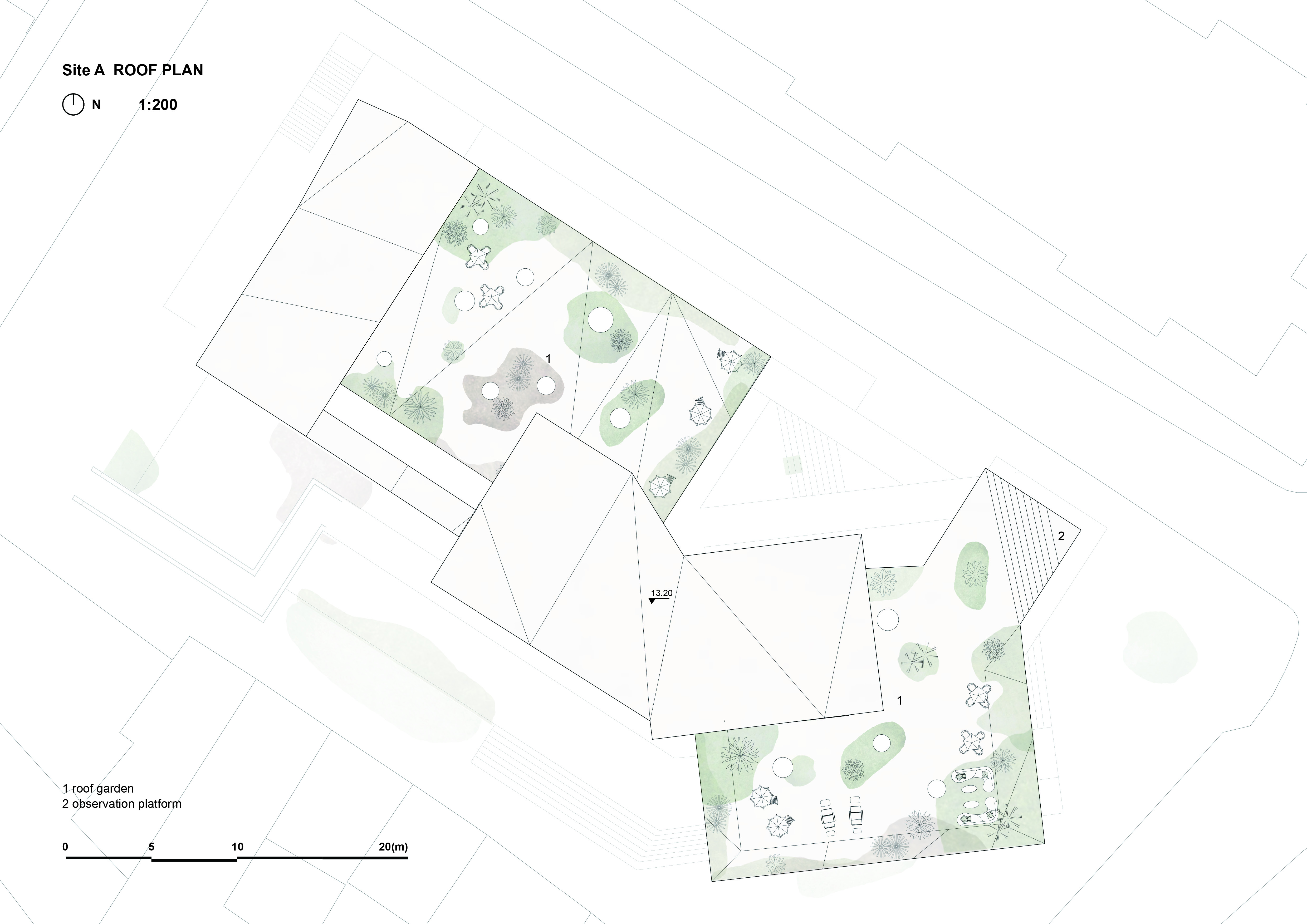
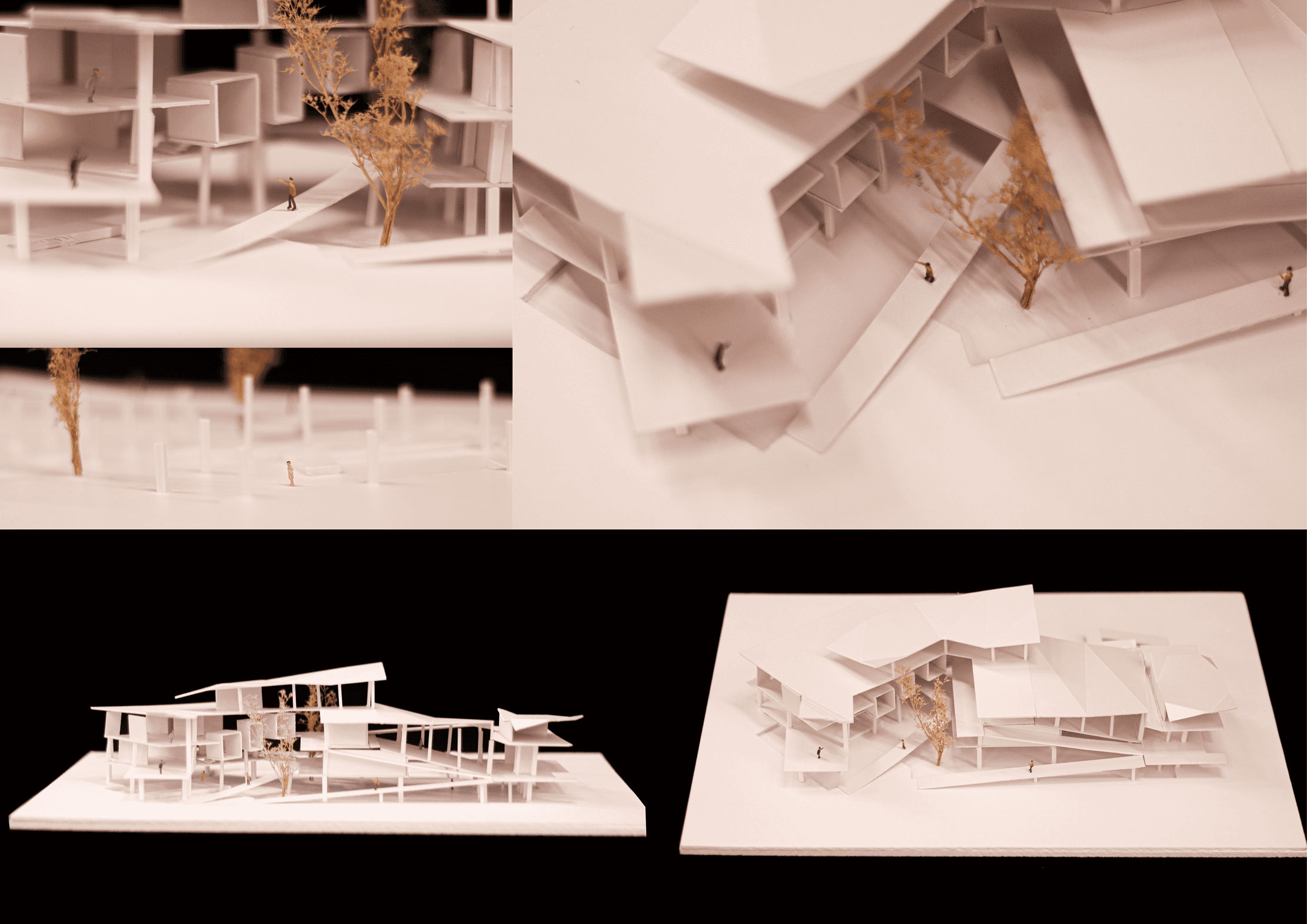
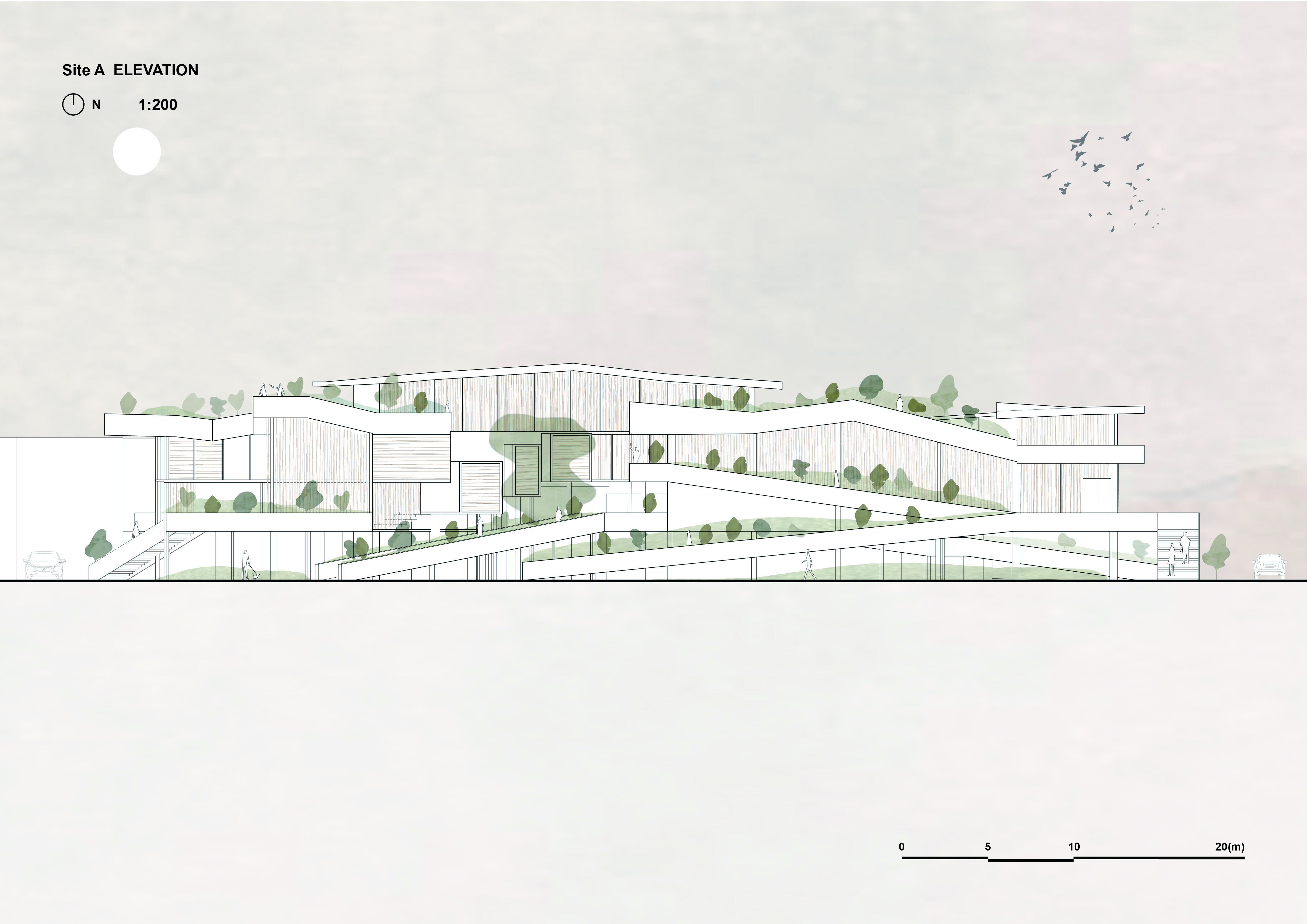
The entire building is white, with ramps connecting each floor, resembling the continuous flow of mountains, and adorned with greenery throughout.
Physical Model
The removable model is made from foam board and plastic rods.